Franz Joseph Haydn
About the composer
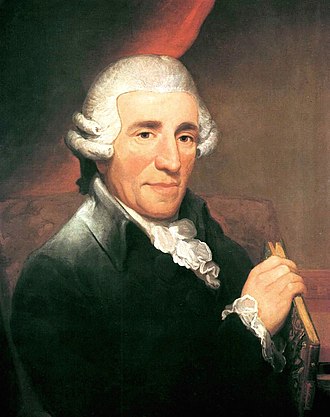
Joseph Haydn (1732 – 1809) was born in Rohrau, Austria. He composed amongst others more than 100 symphonies, 84 string quartets, 10 masses and four large oratorios. His Stabat Mater was praised by his contemporaries, for instance by the then famous composer Hasse. Haydn, who had sent it to Hasse in the hope that “this great and world-celebrated composer” (Haydn’s words) would rectify the weaker parts of the composition, was completely surprised that Hasse “honoured the work by inexpressibly praise”. Even during his life it was published on a large scale and became his most well-known sacred work. Haydn died in Vienna.
About the Stabat Mater
| Date | 1767 |
|---|---|
| Performers | Soprano, Tenor, Alto, Bass, Choir and Orchestra |
| Length | 69.01 minutes |
| Particulars | The work is divided into 13 sections. The work is built round five choruses, seven arias and one duet. In the final movement the chorus establishes the vision of the Paradise in a bright G major, a fugue that becomes more and more florid until it encourages a burst of grateful coloratura from the soprano. |
| Textual variations | the "Analecta"-text is used, with following changes: - Stanza 14, line 2: not "Te libenter sociare" but "Et me tibi sociare" - Stanza 16, line 2: not "Passionis eius sortem" but "Passionis fac consortem" - Stanza 18, line 1 and 2: not "Inflammatus et accensus, per Te, Virgo, sim defensus" but "Flammis orci ne succendar, per Te, Virgo, fac, defendar" |
| Colour bar | 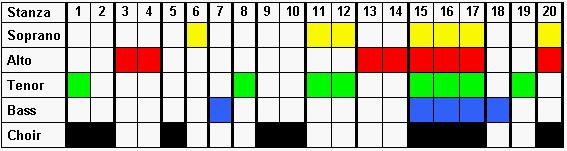 |
Information about the recording
| CD: | Deutsche Grammophon 429 733-2: Joseph Haydn, Stabat Mater |
| More info: | The work was played on authentic instruments and recorded at the All Saints' Church, London, in July 1989. You can listen to this recording. See |